Source luxury sport used sedan car for family, fleet, and daily driving
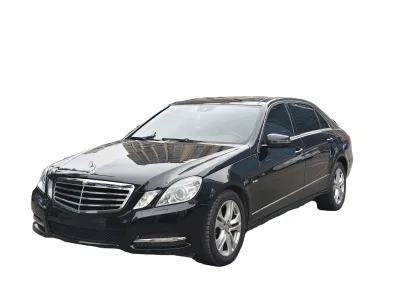
Compare 30 listings of luxury sport used sedan car options including Mercedes-Benz C-Class models with varying engines and mileage. Buyers can review specifications for automatic gearboxes, hybrid or gasoline fuel types, and service life data to find suitable vehicles for family or fleet use.
Key considerations
Products List






Comprehensive Sourcing Guide
Strategic Sourcing Guide for Luxury Sport Used Sedan Vehicles
Understanding the Market Segment and Product Variants
The procurement of a luxury sport used sedan requires a nuanced approach that balances performance expectations with the specific operational realities of the secondary market. In the current landscape, buyers are presented with a diverse array of vehicles that span different model years, powertrain configurations, and condition grades. The observed market data indicates a significant variance in product attributes, ranging from entry-level luxury sedans to high-performance variants. For instance, listings include models such as the 2023 Mercedes-Benz C-Class C260L, the 2023 C200L, and the 2018 C180L, alongside other variants like the 180DVVT Global Luxury Edition. This diversity necessitates a rigorous filtering process to align specific vehicle attributes with the buyer's operational requirements.
The core keyword "luxury sport used sedan car" often implies a vehicle with a sport-tuned chassis, premium interior finishes, and a powerful engine. However, the actual product count and observed attributes reveal a broader spectrum. Some units are categorized strictly as family cars with a service life of 3-6 years, while others are positioned for longer-term utility with a service life of 6-10 years. The fuel types observed include both hybrid and gasoline configurations, suggesting that the definition of "sport" in this context may vary from fuel-efficient performance to pure gasoline power. Buyers must carefully distinguish between these variants, as the maintenance profile and total cost of ownership will differ significantly between a hybrid sedan and a gasoline-powered model.
Technical Specifications and Performance Analysis
When evaluating technical specifications, the buyer must scrutinize the engine, transmission, and drivetrain data to ensure the vehicle meets the "sport" criteria. The available data highlights specific engine configurations, such as the 1.5L Turbo L4 engine found in certain 2023 models, which delivers a maximum power of 150kW (204PS) and a torque of 300N·m. This configuration suggests a strong performance capability suitable for dynamic driving. In contrast, other listings show a 1.6L Turbo L4 engine with 125kW (170PS) and 250N·m of torque, or a 1.5t 181PS engine producing 133kW (181PS) and 285N·m of torque.
The drivetrain configuration is another critical technical factor. The data indicates a mix of Rear-Wheel Drive (RWD) and Front-Wheel Drive (FWD) systems. For a buyer seeking a true "sport" driving experience, the RWD configuration is often preferred for its balanced weight distribution and handling characteristics. However, the presence of FWD models, such as those with a Tiptronic gearbox, suggests that the market includes vehicles optimized for traction and stability in various road conditions rather than pure sportiness. The gearbox types observed include Automatic and Tiptronic transmissions, which are standard in the luxury segment but require verification of their condition and shift logic.
Fuel consumption figures also play a role in the technical assessment. The observed range spans from 6.3L/100km to 6.6L/100km for specific models, while others list displacement ranges of 1.0-1.6L or 2.0-2.6L. A vehicle with a 2.5L Naturally Aspirated L4 engine represents a different performance profile compared to the turbocharged options. Buyers should verify the intake type, as turbocharged engines generally offer better low-end torque, which is essential for sporty acceleration. The number of cylinders is consistently listed as 4-Cylinder across the observed data, which is typical for this class of vehicle, balancing performance with efficiency.
Compliance, Certification, and Regulatory Standards
Compliance with international and local regulations is a paramount consideration when sourcing used luxury sedans. The observed data includes specific dimensional standards, such as 4882x1820x1461mm for the 2023 C260L and 4784x1810x1457mm for the 2018 C180L. These dimensions are critical for ensuring the vehicle fits within the regulatory limits of the destination country, particularly regarding parking regulations, garage clearance, and road tax classifications. Buyers must verify that the vehicle's standard dimensions align with local laws before finalizing a purchase.
Furthermore, the origin of the vehicle, listed as China in the provided data, introduces specific compliance requirements regarding import regulations, emissions standards, and safety certifications. While the data mentions a standard of "4882x1820x1461mm," it does not explicitly state compliance with specific safety standards like Euro 6 or FMVSS. Buyers must independently verify that the vehicle meets the emissions and safety standards of the target market. The absence of explicit certification data in the product listing means that the buyer cannot assume compliance based on the provided facts alone. Due diligence is required to confirm that the vehicle has not been modified in a way that voids its original certifications or fails to meet local import requirements.
Cost Drivers and Financial Considerations
The financial landscape for sourcing used luxury sedans is influenced by several key cost drivers, including the vehicle's age, mileage, and condition. The observed price range in USD is vast, spanning from 28 to 240,000. This extreme variance suggests that the market includes everything from highly depreciated units to pristine, low-mileage examples. The minimum order quantity (MOQ) is observed to be between 1 and 2 units, indicating flexibility for buyers looking to purchase single vehicles or small fleets.
Mileage is a primary determinant of value and future maintenance costs. The data shows mileage ranges from 10,000-30,000 km to 60,000-100,000 km. A vehicle with 30,000-60,000 km represents a mid-life stage where major maintenance items, such as timing belts or transmission services, may soon be due. Buyers should factor these potential costs into their total acquisition budget. Additionally, the service life of the vehicle, ranging from 3-6 years to 6-10 years, impacts the long-term value proposition. A vehicle with a shorter remaining service life may require a higher initial discount to justify the investment.
The fuel type also influences operating costs. Hybrid models may offer lower fuel consumption and potential tax incentives, while gasoline models might have higher running costs but potentially lower upfront purchase prices. The observed fuel consumption figures, such as 6.3L/100km and 6.6L/100km, provide a baseline for estimating ongoing expenses, but actual consumption will vary based on driving habits and road conditions.
Typical Applications and Usage Scenarios
The intended usage of the vehicle is a critical factor in the selection process. The data explicitly categorizes some units as "Family Car," suggesting that while they possess luxury attributes, their primary design focus may be on comfort and practicality rather than high-performance sport driving. However, the presence of "RWD" drive modes and "Turbocharged" engines indicates that these vehicles are also capable of delivering a sporty driving experience.
For buyers seeking a vehicle for family use, the 5-seat configuration and dimensions around 4.7 to 4.8 meters in length are ideal. The "Road" condition attribute implies that these vehicles are designed for standard paved surfaces, which is typical for urban and suburban environments. However, for buyers who require a vehicle for more demanding applications, such as high-speed cruising or spirited driving, the specific engine power and torque figures become more relevant. The 1.5L Turbo L4 engine with 204PS is particularly well-suited for dynamic driving, offering a balance of power and efficiency.
Supplier Evaluation and Quality Control Protocols
Evaluating suppliers in the used luxury sedan market requires a focus on transparency and reliability. Since the data does not provide specific supplier names, buyers must rely on the quality of the product descriptions and the consistency of the data provided. A reliable supplier should be able to provide detailed inspection reports, including the vehicle's service history, accident records, and current mechanical condition.
Quality control should extend beyond the visual inspection of the vehicle. Buyers should verify the condition of critical components such as the braking system, which is listed as "Mechanical" in the data. While mechanical brakes are standard, their condition can vary significantly in used vehicles. It is essential to request a detailed report on the brake pads, rotors, and fluid levels. Similarly, the gearbox condition should be verified, especially for Tiptronic and Automatic transmissions, which can be complex and expensive to repair if neglected.
The packaging method, listed as "Container Film Wrapping," indicates a standard practice for protecting the vehicle during transit. However, buyers should ensure that the packaging is sufficient to prevent damage during long-distance shipping, particularly for luxury vehicles with sensitive exterior finishes. The color options observed, including Blue, Red, and White, should be verified against the actual vehicle to ensure that the listing matches the physical unit.
Long-Term Procurement and Lifecycle Management
Long-term procurement considerations involve planning for the entire lifecycle of the vehicle, from acquisition to disposal. The service life data, ranging from 3-6 years to 6-10 years, suggests that buyers should have a clear strategy for vehicle rotation or major overhauls. For a fleet of used luxury sedans, maintaining a consistent service schedule is crucial to maximizing the remaining service life.
The customization options available in the market allow buyers to tailor the vehicle to their specific needs. Whether it is upgrading the interior, adding performance parts, or modifying the suspension, the availability of customization can extend the useful life of the vehicle. However, buyers must ensure that any modifications comply with local regulations and do not void the vehicle's warranty or insurance coverage.
In conclusion, sourcing a luxury sport used sedan requires a comprehensive understanding of the technical specifications, compliance requirements, and cost drivers. By carefully analyzing the observed data and conducting thorough due diligence, buyers can make informed decisions that align with their strategic objectives. The wide range of options available, from the 2023 C260L to the 2018 C180L, offers flexibility for different buyer profiles, but success depends on rigorous evaluation and quality control.
FAQs
What engine options are available for luxury sport used sedan cars?
Available engines include 1.5L Turbo L4 and 1.6L Turbo L4 configurations. Some units feature a 2.5L Naturally Aspirated L4 engine. Displacement ranges from 1.0 to 2.6 liters depending on the specific model year and variant selected.
Which drive modes are offered for these luxury sport used sedan cars?
The vehicles are available in both Rear-Wheel Drive and Front-Wheel Drive configurations. RWD models are often preferred for sportier handling characteristics. FWD variants typically include Tiptronic transmissions for enhanced stability.
How does the service life vary across different luxury sport used sedan cars?
Service life estimates range from 3 to 10 years depending on the specific model and condition. Some units are rated for 3 to 6 years of operation, while others are expected to last 6 to 10 years. Mileage and maintenance history significantly impact this duration.
Can buyers customize luxury sport used sedan cars to meet specific needs?
Yes, customization is available for many units in the current market. Buyers can request specific modifications to align with operational requirements. This flexibility allows for tailoring the vehicle to distinct usage scenarios or personal preferences.
What is the typical fuel consumption for these luxury sport used sedan cars?
Fuel consumption figures generally range between 6.3 and 6.6 liters per 100 kilometers. Hybrid and gasoline variants show similar efficiency levels in the observed data. Actual consumption may vary based on driving conditions and vehicle load.
Which gearbox types are found in these luxury sport used sedan cars?
The listings include Automatic and Tiptronic transmission types. Automatic gearboxes are standard for smooth operation, while Tiptronic units offer manual shift capabilities. The specific type depends on the model year and engine configuration selected.
How does the mileage affect the value of luxury sport used sedan cars?
Mileage ranges from 10,000 to 100,000 kilometers across the available inventory. Lower mileage units typically command higher prices and may require less immediate maintenance. Mid-range mileage vehicles often represent a balance between cost and remaining service life.
What packaging is used for shipping these luxury sport used sedan cars?
Vehicles are shipped using container film wrapping to protect the exterior. This method ensures the car remains secure during transit. The packaging standard helps prevent damage to the paint and bodywork before delivery.